
1 _ Spazio Italiana Terricci “Il giardino ritrovato”
A few questions to Marco Fraschini
Let’s talk about Genesis—how did your story begin?
I was born in Colico on the shores of Lake Como in August 1943, in the midst of wartime. In Colico I began to appreciate the woods and meadows (then largely cultivated), surrounding the small villages nestled on the slopes of Mount Legnone.
My love for greenery, blooming meadows, and the landscapes of stone alpine pastures led me to draw what I saw, turning these two passions – drawing and nature– into the foundation of my story.
After graduating in architecture, my professional life (which lasted more than fifty years) developed without ever forgetting those early inclinations, with colorful drawings – long before renders – and at least one tree in every project.
As a child, I lived in Milan, on the fifth floor: all around were empty fields, abandoned by agriculture and covered with rubble, later replaced by construction sites as Milan expanded.
My connection with nature began with the “large pots” – large at least to me, being only six at the time – on the balcony of my room. I didn’t plant the usual flowers in those pots, but tried to grow small “forests” or parks, selecting wild herbs – what others called weeds – best suited for the role. I would gather their first shoots in spring, from the edges of the now-abandoned meadows in my suburban area, and transplant them with great care.
They were annual herbs, but when they grew, to me they looked like miniature trees. Then one day I planted a tree – I collected the seeds from the street – and anxiously waited for spring. The tree sprouted and, season after season, grew taller, and I planted new friends alongside it.
How does nature inspire your projects and lifestyle?
If I had to choose between a museum and a park or forest, I would choose—if I couldn’t visit both—the latter, even though Ruskin believed that only the charm of great ancient architecture can make us forget, in the hearts of our cities, the trees and greenery we’ve lost.
It’s obvious, then, that the natural component of any landscape has always been essential to me. That’s why I’m always surprised to see people sweeping away leaves as if they were mere litter, when in fact leaves are nature’s “confetti,” trying to reclaim and soften the human work that has altered it.
In every structure I built, I always made room for greenery on every balcony and, when possible, even on every window. If planting a few flowers is simple and accessible, many people will do it gladly. But if it becomes complicated, most will give up—leaving the façades of our homes ever more bare and grey.
How do you imagine your “mental landscape” when you create? Are there real or imaginary places that guide you?
In my mind, there is a series of real landscapes from my youth and my first major travels. Over time, they’ve settled and perhaps transformed into fantastical landscapes, but I still compare everything I see with them.
Once at the cinema, I was stunned and fascinated by the setting of a film – Hitchcock’s The Trouble with Harry – which told the story of a boy who roamed woods and meadows during a fantastic autumn. That was over seventy years ago, but those images almost shaped my life. Later, traveling across Italy and Europe, I discovered many new landscapes – ones I couldn’t live in, but could stay in for a few days, just enough to know them and belong to them a little.
My memories are like a great mosaic: from the enchanted parks of Denmark to the endless forests between lakes and fjords in Norway and Sweden, where at sea level you find the same flowers that bloom at 2000 meters in the Alps; from the oak woods of the great Balkan plain to the still-wild forests of its mountains, thick with dark conifers and magical undergrowth.
Then with a few kilometers’ shift southward, I encountered the explosion of color of the south – flowers, trees, and sun-ripened fruit aromas that, for us, exist only in greenhouses. I’ve seen many lakes bigger than ours (Lake Como) and famous in their own countries, but none quite like the Lario.
Who are the people who have most inspired you artistically and professionally?
It may sound trivial, but in the beginning, there were two family members.
My grandfather Giacomo, born in 1869, who left the vineyards of Oltrepò and spent his entire working life at Comit in Piazza della Scala from its founding day. In the long retirement that followed – he died at 102 – he devoted himself to gardening and tending the vegetable garden.
The second was my mother, a Latin teacher, who taught me the exact names of flowers she photographed with undeniable skill and later classified; all flowers and plants bear their first name in Latin.
With her, I experienced my first blooms. Then, when I started my professional journey, I found confirmation of some of my (sometimes contested) choices in the works of the famous architect Pietro Porcinai, who used local trees without disrupting the landscape with exotic and out-of-place species.
What does Avant gardening mean to you?
In my very personal opinion, Avant gardening is a lifestyle, not just a trend. It’s characterized by “care,” a key element in both the creation and maintenance of any garden or green space. Added to this is the desire to live beauty in its natural form – a beauty that can be shaped and created, as still happens in great historic gardens.
Avant gardening is about always having a different way of seeing things, about knowing how to improve green spaces. Practicing Avant gardening requires a true culture of landscape and nature.
How do you practice the search for wonder?
Wonder, already recognized by Aristotle as the emotion at the origin of philosophy, is one of the most essential elements of life.
A practice that is both an escape from reality and an enrichment of it.
Today, in a world increasingly flattened and convinced it knows and understands everything, wonder is becoming an emotion at risk of extinction—yet it is crucial to keep alive people’s sense of awe and curiosity.
I believe the best way to cultivate wonder is through observation.
We should strive to be amazed every single day.
And when observing the world isn’t enough, there’s another powerful exercise: sharing. Telling others what has amazed us—and reliving, together, that very same emotion.
What emotion or feeling do you hope people experience when engaging with your work?
My greatest fear is that people might walk past my creations without looking, without saying a word.
I don’t want to amaze at all costs, but I always hope it’s clear that the green design is neither secondary nor obvious.
In the work I usually do, time is an important factor: the seasons can give the garden a different meaning each time.
I wrote an essay titled “Un giardino per tutte le stagioni” because, all too often, people become passionate about gardens and gardening only in spring. Then vacations, work, and school make them forget about it—until the next spring.
I hope this won’t be the case for the gardens I’ve created and “planted,” because I want the wonder of that first day to return each year, in every season.
Five words that you closely associate with the concept of the Garden of Eden
He planted, in the East, delightful trees, a river, naked bodies.
Bio
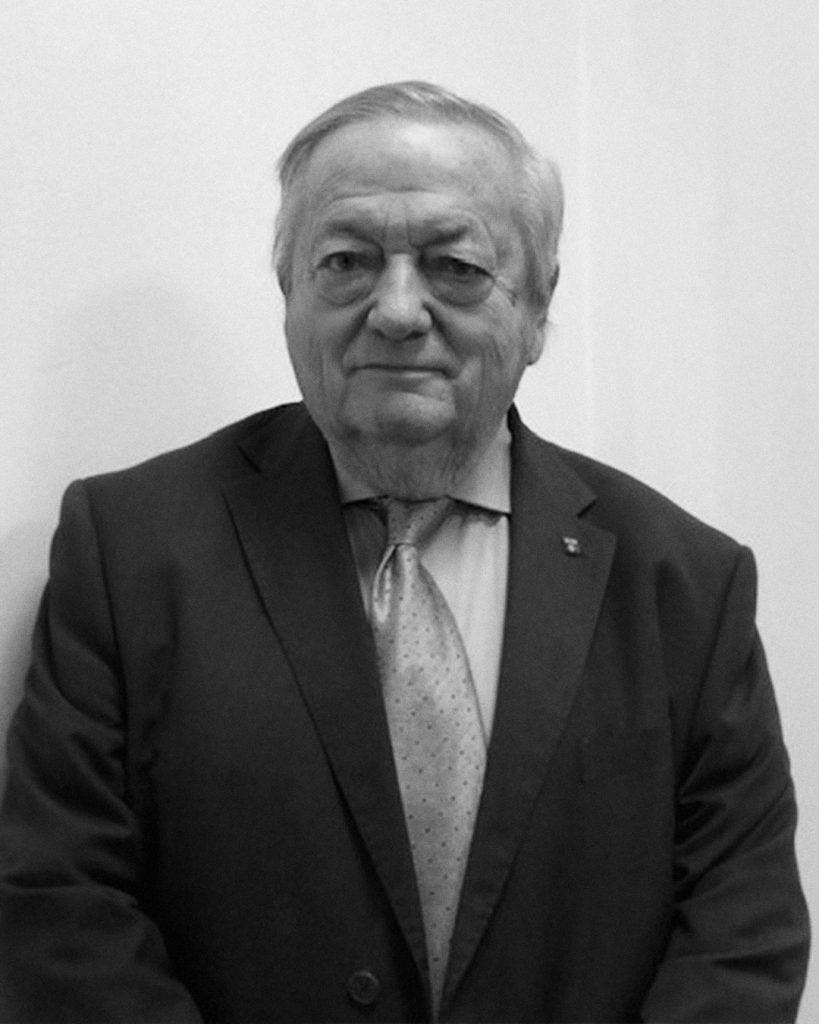
Marco Fraschini, architect, born in 1943.
Author of the book Progetti di Giardini and contributor to Villegiardini, throughout his career he has served as a public administrator, municipal technician, and a key figure in major urban transformations.
He is currently the technical director of Urges Srl, through which he continues his commitment to creating spaces where architecture and landscape are seamlessly integrated.
A lifelong enthusiast of gardens and nature.
Pierre-Alexandre Risser